AI Audio Processing Use Cases List for Professionals
AI Audio Processing Use Cases List for Professionals
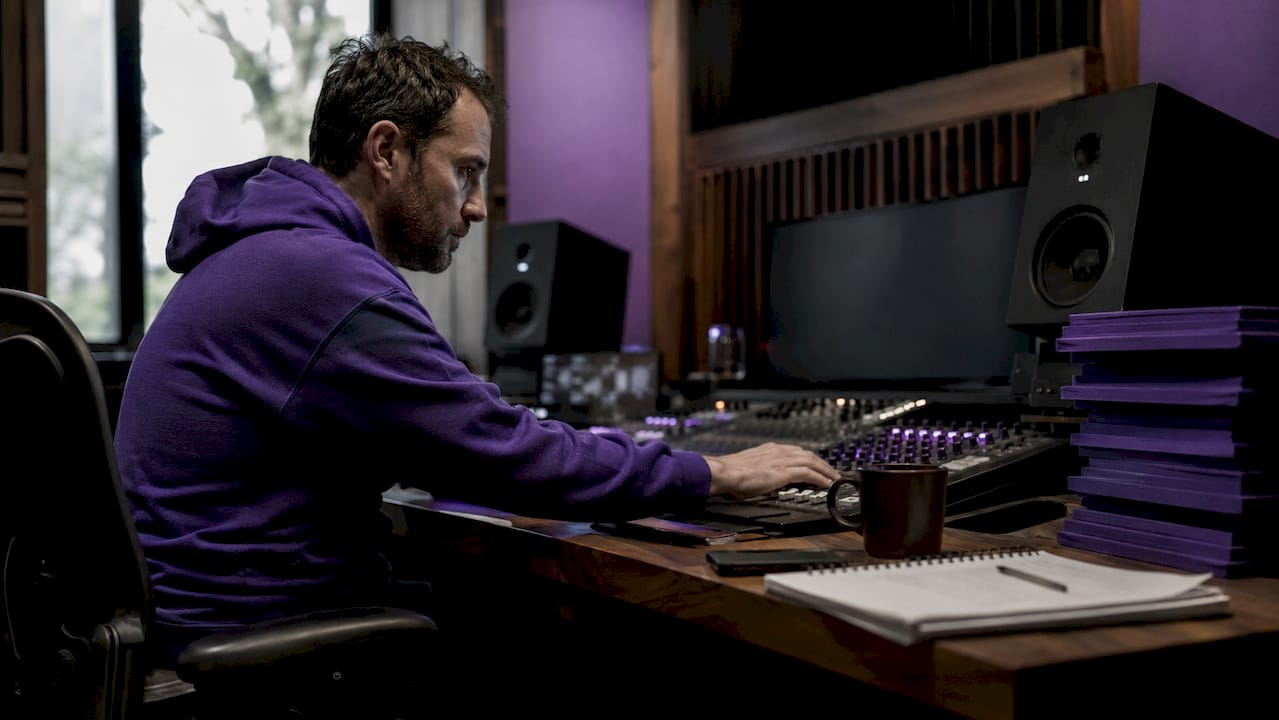
AI audio processing is defined as the application of machine learning models and digital signal processing algorithms to analyze, transform, generate, or enhance audio signals in real time or offline. This field now covers everything from automatic speech recognition (ASR) and voice cloning to neural noise suppression and generative music composition. Platforms like ElevenLabs, LocalVQE, and Voicebox represent the current frontier, each targeting a distinct segment of the AI audio applications space. For audio professionals and tech enthusiasts, understanding this full spectrum is no longer optional. The use cases below are drawn from deployed systems, published benchmarks, and real production workflows.
1. The AI audio processing use cases list: what it covers
The standard industry term for this domain is machine learning audio processing, though "AI audio processing" has become the working shorthand across DAW forums, developer docs, and product pages. The distinction matters because it signals which tools belong in the conversation. Neural networks, transformer architectures, and convolutional recurrent models all qualify. Rule-based DSP filters, on their own, do not.
This list covers eight active use categories: speech recognition, voice synthesis and cloning, noise suppression and echo cancellation, creative audio generation, speech infrastructure, audio analysis, music production integration, and edge deployment. Each category has production-ready tools behind it today, not just research prototypes.

2. Automatic speech recognition and transcription
ASR is the most commercially mature branch of AI audio applications. Models convert spoken audio to text with accuracy that now rivals human transcription in controlled conditions, and they do it in real time across dozens of languages.
Key production use cases include:
- Call center transcription for compliance logging and agent coaching
- Podcast and video captioning with speaker diarization
- Content indexing that makes audio archives searchable
- Live broadcast captioning for accessibility compliance
- Voice-controlled DAW navigation for hands-free session management
The shift from file-based to streaming ASR is the defining technical trend of 2026. Low-latency models now process audio in chunks under 100 ms, making real-time captioning viable without dedicated GPU hardware. Multi-language and dialect recognition has also matured, with leading models handling code-switching mid-sentence. For audio engineers building podcast workflows, this means automated chapter markers and searchable transcripts are now a one-click operation rather than a post-production task.
Pro Tip: When evaluating ASR tools for studio use, test on your actual recording environment. Models trained on clean speech degrade significantly in rooms with reflections, and that gap rarely shows up in published benchmarks.
3. AI-powered voice synthesis, cloning, and dubbing
Text-to-speech synthesis has crossed a quality threshold that makes synthetic voices indistinguishable from human recordings in double-blind listening tests. Voice cloning extends this further by capturing a specific speaker's timbre, cadence, and emotional register from a short audio sample.
Production applications break down into three tiers:
- Standard TTS for narration, e-learning, and accessibility features where a generic but natural-sounding voice is sufficient
- Branded voice cloning for consistent character voices across game franchises, virtual assistants, or corporate training content
- Dubbing and localization where AI replaces or supplements human voice actors for global content distribution
ElevenLabs and similar platforms support up to 32 languages with emotional intonation awareness, enabling content teams to reach global audiences at a fraction of traditional localization cost. AI dubbing tools are transforming localization workflows for video, training content, and webinars by reducing turnaround time from weeks to hours.
Ethical considerations are not optional here. Consent-based voice cloning requires explicit permission from the voice owner, and several jurisdictions now treat unauthorized voice replication as a rights violation. Any production pipeline using voice cloning needs a documented consent and verification step.
Pro Tip: For dubbing projects, always run a phoneme-level timing check after AI synthesis. Emotional intonation models are strong on sentence-level prosody but can misplace stress on compound technical terms.
4. Noise suppression, echo cancellation, and audio quality enhancement
This is where AI audio processing delivers the most measurable, immediate value for working engineers. Neural models now outperform traditional DSP gates and spectral subtraction in complex acoustic environments, particularly when noise sources are non-stationary.
The benchmark numbers are concrete. Neural speech enhancement models achieve PESQ scores up to 2.75 with only 33 ms latency running on edge chips at just 0.1 TOPS. That means near-state-of-the-art noise reduction in consumer headphones without a dedicated processor. LocalVQE, an open-source model, performs real-time enhancement at approximately 9.6x real-time speed on commodity CPU hardware, handling acoustic echo cancellation, dereverberation, and noise suppression jointly in a single 5 MB model with frame latency around 1.66 ms.
| Method | Latency | CPU Load | Best For |
|---|---|---|---|
| Neural (LocalVQE) | ~1.66 ms/frame | Low (commodity CPU) | Broadband noise, reverb, echo |
| Traditional DSP gates | Near zero | Predictable | Steady-state hum, clicks |
| Hybrid AI + DSP | Variable | Moderate | Mixed noise environments |
Traditional DSP methods like gates, de-hummers, and spectral subtraction remain preferred for specific, predictable noise types because their CPU behavior is deterministic. The practical answer for most broadcast and conferencing workflows is a hybrid approach: AI handles the complex, time-varying noise while DSP handles the known, static artifacts.
Pro Tip: If you are deploying noise suppression in a plugin chain, place the AI denoiser before any dynamic processing. Running compression before denoising causes the compressor to react to noise transients, which makes the AI model's job significantly harder.
5. Creative AI audio generation: music, sound effects, and spatial audio
Generative AI creates original music tracks and sound effects by learning patterns from existing audio, then producing new material that matches a target style, tempo, or emotional character. For production teams, this changes the economics of custom audio.
Practical applications include:
- Royalty-free background music generated to exact duration and mood specifications for video content
- Procedural sound effects for games that vary dynamically based on in-game state
- Ambience and texture layers for film and podcast production
- Rapid prototyping of sonic identities before committing to a composer
- Stem-level generation where AI produces individual instrument parts that producers can recombine
The advantage over traditional sample libraries is not just cost. Generated audio has no licensing tail, matches exact timing requirements without editing, and can be regenerated with parameter adjustments. A game audio director can specify "tense, 90 BPM, no percussion" and receive a usable loop in seconds rather than searching a library for hours.
For producers interested in creative sound design techniques, generative AI works best as a starting point rather than a final product. The outputs benefit from human curation, processing, and arrangement before they reach a mix.
6. Speech infrastructure and real-time conversational AI
Speech infrastructure refers to the APIs, SDKs, and embedded streaming models that power voice-enabled applications at the system level. This is distinct from consumer-facing voice tools. It is the layer that developers build on.
The defining characteristic of modern speech infrastructure is the shift toward local-first, privacy-preserving deployment. Developers now prioritize integrated voice systems embedded on user devices rather than cloud-dependent pipelines. This matters for healthcare, legal, and financial applications where audio data cannot leave the device.
Commercial deployments demonstrate clear business value. AI voice agents for WISMO call deflection and intelligent call routing can be deployed rapidly to scale operations without adding human staff. A mid-size e-commerce operation can deflect a significant portion of inbound "where is my order" calls through a voice agent that integrates directly with order management systems.
"Speech infrastructure is moving from a cloud service you call to a capability you embed. The privacy and latency benefits of local models are now compelling enough that cloud-only pipelines are becoming the exception, not the rule."
For audio professionals building tools or plugins, this shift means low-latency audio considerations are now central to speech feature design, not an afterthought.
7. AI-driven audio analysis and classification
Audio analysis uses machine learning to extract structured information from unstructured audio signals. The outputs feed quality control systems, content moderation pipelines, and production monitoring tools.
Active use cases include speaker identification for multi-party recordings, genre and mood classification for music catalog management, anomaly detection in industrial audio monitoring, and automatic loudness normalization against broadcast standards like EBU R128. For mastering engineers, AI analysis tools now flag potential clipping, phase issues, and spectral imbalances before a mix reaches the mastering chain. This shifts error detection earlier in the workflow, which reduces revision cycles.
The Faust audio DSP environment represents one approach to combining AI analysis with traditional signal processing, using machine learning integration with automatic differentiation to bridge manual DSP design and deep learning models. For engineers who want to build custom analysis tools rather than rely on off-the-shelf solutions, this kind of hybrid framework is worth understanding.
8. AI integration in music production and DAW workflows
AI is entering digital audio workstations not as a replacement for producer judgment but as a precision assistant. Stem separation, pitch correction, spectral repair, and intelligent gain staging are all areas where machine learning models now operate inside the production session.
Audio stem processing powered by AI allows producers to isolate vocals, drums, bass, and melodic elements from mixed recordings with accuracy that was impractical three years ago. This unlocks remix workflows, sample clearance alternatives, and mix correction on delivered stems. AI pitch correction has also moved beyond simple tuning to include formant-aware processing that preserves vocal character while correcting intonation. The difference between a natural-sounding correction and an obvious one now depends almost entirely on model quality rather than operator skill.
For engineers evaluating AI audio enhancement tools for DAW integration, the critical factors are plugin format support (VST3, AU, AAX), real-time processing capability, and how gracefully the tool degrades when the input material falls outside its training distribution.
Key takeaways
AI audio processing delivers the most immediate professional value in noise suppression, speech recognition, and voice synthesis, with creative generation and DAW integration representing the fastest-growing adoption areas in 2026.
| Point | Details |
|---|---|
| Neural noise suppression leads | Models like LocalVQE achieve sub-2 ms latency on commodity CPUs, outperforming traditional DSP in complex noise environments. |
| Voice cloning requires consent protocols | Any production pipeline using voice cloning must include documented consent verification to meet emerging legal standards. |
| Hybrid AI and DSP outperforms either alone | Combining neural models with traditional DSP gates handles both complex and predictable noise types more reliably. |
| Speech infrastructure is going local-first | Privacy-preserving, on-device speech models are replacing cloud pipelines in regulated industries. |
| Creative generation accelerates prototyping | AI-generated music and sound effects reduce custom audio production time from days to minutes for content teams. |
Where AI audio is heading and what it means for your workflow
The conversation around AI audio tends to split into two camps: people who think it will replace audio professionals, and people who dismiss it as a novelty. Both positions miss the actual story. What AI does well is handle the repetitive, computationally intensive tasks that consume time without requiring creative judgment. Noise suppression, transcription, stem separation, loudness normalization. These are not creative acts. They are maintenance. Handing them to a model frees up the hours that actually matter.
What concerns me more is the uncritical adoption of generative tools in production pipelines without understanding their failure modes. AI music generators produce material that sounds plausible but often lacks the internal logic that makes a piece of music hold together over time. A 30-second loop is convincing. A three-minute track frequently is not. Producers who treat AI output as a finished product rather than raw material are going to deliver work that sounds generic, and clients will notice even if they cannot articulate why.
The edge deployment trend is the development I find most technically significant. Running a 5 MB neural model on a commodity CPU at 1.66 ms latency is not a research result anymore. It is a shipping product. That means AI audio enhancement is no longer a cloud feature. It is a plugin feature. For companies like Vector-dsp building professional DSP tools, this is the design space that matters most right now.
My advice: pick one use case from this list, find the best open-source or low-cost tool that addresses it, and run it against your actual production material for two weeks. The gap between benchmark performance and real-world performance on your specific content is where the real learning happens.
— Kai
Explore Vector-dsp tools built for serious audio work

Vector-dsp builds professional audio plugins grounded in the same DSP principles that make the neural models in this article work at production quality. The ToneLab plugin applies AI-informed processing to tonal shaping and enhancement, designed for music producers and sound engineers who need precision without unpredictable behavior. If you work in VST3, AU, or AAX environments and want tools that perform at the level this article describes, the Vector-dsp product lineup is built specifically for that standard. For a closer look at the AI-enhanced processing behind ToneLab, the ToneLab product page covers the technical architecture and workflow integration in detail.
FAQ
What is AI audio processing?
AI audio processing is the use of machine learning models to analyze, enhance, generate, or transform audio signals. It covers applications from noise suppression and speech recognition to voice synthesis and generative music composition.
How does AI noise suppression compare to traditional DSP?
Neural models like LocalVQE outperform traditional DSP in complex, non-stationary noise environments, achieving PESQ scores up to 2.75 at under 2 ms latency. Traditional DSP gates and spectral subtraction remain more predictable for steady-state noise types like hum or clicks.
Can AI voice cloning be used commercially?
AI voice cloning is commercially viable but requires explicit consent from the voice owner. Several jurisdictions now treat unauthorized voice replication as a rights violation, so any commercial pipeline needs a documented consent and verification process.
What AI tools integrate directly with DAWs?
AI-powered plugins in VST3, AU, and AAX formats integrate directly with major DAWs for tasks like stem separation, pitch correction, noise suppression, and spectral repair. Vector-dsp's ToneLab is one example of a professionally designed AI-informed plugin built for these formats.
How fast can AI audio models run in real time?
Optimized models like LocalVQE run at approximately 9.6x real-time speed on standard CPU hardware with frame latency around 1.66 ms, making real-time audio enhancement practical without dedicated GPU or cloud infrastructure.