Professional Audio Standards Overview List for Pros
Professional Audio Standards Overview List for Pros

Professional audio standards are the technical and performance guidelines set by industry bodies like the AES, IEC, and ITU to ensure consistency, quality, and interoperability across sound production and engineering environments. This professional audio standards overview list covers the specifications every music producer and sound engineer needs to know in 2026, from digital interoperability protocols like AES67 to loudness normalization standards like ITU-R BS.1770 and EBU R128. Mastering these audio quality standards is not optional for serious work. They determine whether your mix translates across platforms, whether your system performs reliably under load, and whether your measurements mean anything to anyone else.
1. Key digital audio interoperability standards
Digital audio interoperability is the ability of equipment from different manufacturers to exchange audio signals without conversion errors or proprietary lock-in. Without a shared standard, networked audio systems become isolated islands that cannot communicate reliably.
AES67 is the dominant AoIP protocol, supporting audio up to 192 kHz and low packet times that make real-time broadcast and live production viable. It solves the interoperability problem across proprietary AoIP networks when configured correctly, preventing the "island" effect where different systems cannot exchange audio. The standard defines packet time, sample rate, and channel count parameters that all compliant devices must support.
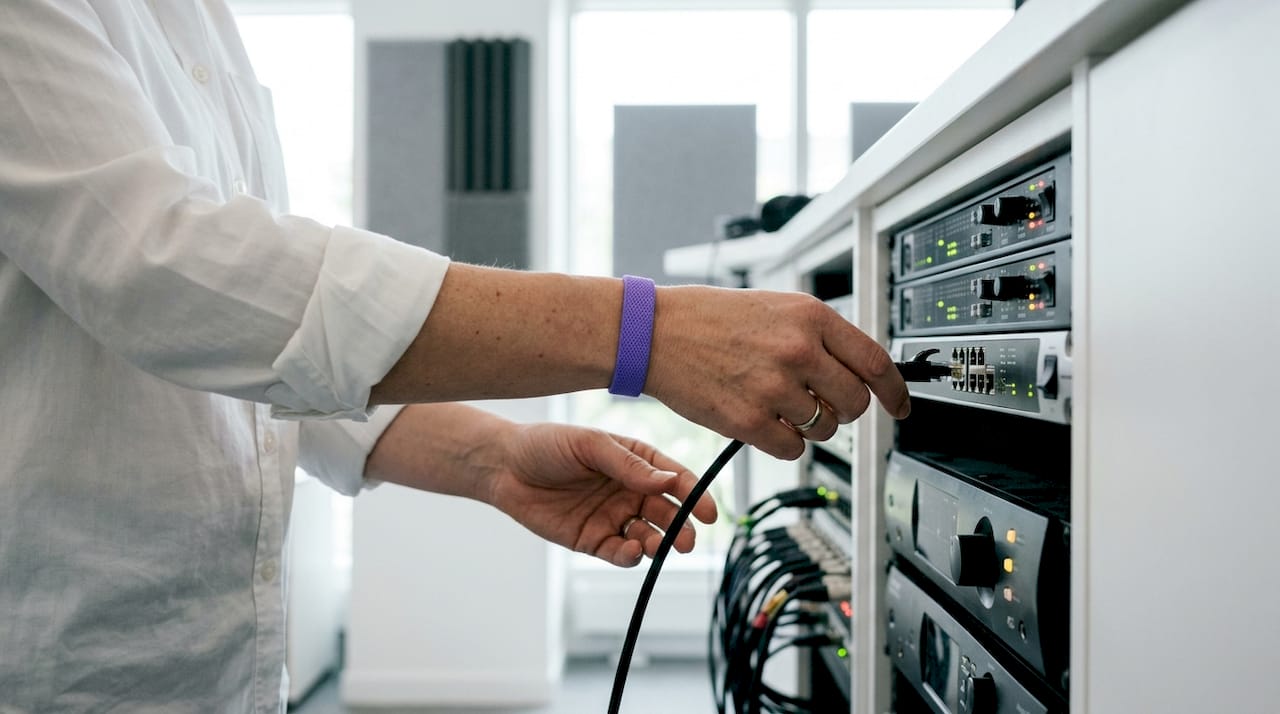
AES3, also known as AES/EBU, remains the standard for point-to-point digital audio transmission over balanced XLR connections. It carries two channels of PCM audio and is still the default interconnect in broadcast studios and recording facilities worldwide. S/PDIF is the consumer-grade variant of AES3, using unbalanced coaxial or optical connections, and it appears in interfaces and consumer electronics where balanced wiring is impractical.
Pro Tip: Mismatched sample rates between devices on an AES67 network cause clicks, dropouts, and phase errors. Always verify that every node on the network shares the same clock source before going live.
| Standard | Max sample rate | Interface type | Typical latency |
|---|---|---|---|
| AES67 | 192 kHz | Ethernet (IP) | 1 ms packet time |
| AES3 (AES/EBU) | 192 kHz | Balanced XLR | Near zero |
| S/PDIF | 192 kHz | Coaxial or optical | Near zero |
2. Loudness and metering standards for broadcast and production
Loudness normalization standards define the target levels that broadcasters, streaming platforms, and production facilities use to deliver consistent perceived volume to listeners. Without them, every program sounds louder or quieter than the last, and listeners reach for the volume control constantly.
ITU-R BS.1770 is the foundational loudness measurement algorithm that weights frequency content to match human hearing sensitivity. EBU R128 builds on BS.1770 and specifies a target integrated loudness of -23 LUFS for broadcast, along with true peak limits and loudness range (LRA) parameters. Streaming platforms like Spotify and Apple Music use BS.1770-derived targets, typically around -14 LUFS integrated, which means your master needs to be measured against the right target for its destination.
Metering types serve different purposes, and understanding each meter's ballistics is critical for accurate level management. VU meters average signal energy over 300 ms and reflect perceived loudness well, but they miss transient peaks entirely. PPM Type I uses a 10 ms attack and 1.5-second decay. PPM Type II uses a 10 ms attack and a 2.8-second decay. Digital True Peak (dBTP) meters use oversampling to detect inter-sample peaks that standard sample-level meters miss entirely.
True peak metering is not a luxury for streaming delivery. Codecs like AAC and MP3 reconstruct audio between samples, and inter-sample peaks that appear safe at 0 dBFS can clip after encoding. A true peak limit of -1 dBTP is the minimum protection for any file destined for a codec-based delivery chain.
Pro Tip: Use loudness standards as a mixing tool, not just a compliance checkbox. Setting your DSP processors to maintain a consistent integrated loudness target during a live show gives you a reliable reference point that no VU meter can provide.
| Meter type | Attack time | Decay time | Primary use case |
|---|---|---|---|
| VU | 300 ms | 300 ms | Perceived loudness, analog mixing |
| PPM Type I | 10 ms | 1.5 s | European broadcast |
| PPM Type II | 10 ms | 2.8 s | UK broadcast |
| Digital True Peak | Oversampling | N/A | Streaming and codec delivery |
3. Acoustic measurement and electroacoustic testing standards
Acoustic measurement standards define how loudspeakers and audio systems are tested so that results from one lab can be compared to results from another. Without traceable, standardized methods, published specifications are marketing numbers rather than engineering data.
The IEC 60268 series defines electroacoustic testing procedures for loudspeakers, amplifiers, and complete sound systems. It covers sensitivity, frequency response, distortion, and power handling measurements, and it specifies the test signals, environmental conditions, and reporting formats required for defensible results. ISO 3741 and ISO 3743 extend this framework to sound power measurements in reverberant and semi-reverberant rooms, which matters when characterizing how a loudspeaker behaves in a real space rather than an anechoic chamber.
Measurement chains require Class 1 calibrated microphones, low-noise preamps, and high-resolution ADCs to guarantee data accuracy. Calibration must be traceable to national metrology institute guidelines, meaning every instrument in the chain has a documented calibration certificate with a known uncertainty. A measurement made with an uncalibrated microphone is not a measurement. It is an estimate.
Pro Tip: Calibration certificates expire. Check the calibration date on every microphone and sound level meter before a critical measurement session. An out-of-date calibration invalidates your data and, in some jurisdictions, your compliance documentation.
Key requirements for a standards-compliant measurement chain:
- Class 1 or Type 1 calibrated measurement microphone
- Pistonphone or acoustic calibrator for field verification
- Low-noise, low-distortion microphone preamp
- High-resolution ADC with documented dynamic range
- Measurement software that reports per IEC 60268 or ISO 3741 formats
- Calibration certificates current within the manufacturer's recommended interval
4. Best practices for professional sound system design
Sound system design starts with acoustic goals, not with a speaker catalog. Defining targets like Speech Transmission Index (STI) above 0.45, frequency coverage from 35 Hz to 18 kHz, and maximum SPL at the farthest seat before selecting any equipment is the correct sequence. Choosing speakers first and then trying to meet acoustic targets is the most common and most expensive mistake in system design.
Budget allocation follows a consistent pattern in professional installations: 30–40% for loudspeakers, 20% for amplification and DSP, and 20% for installation and cabling. The remaining budget covers commissioning, documentation, and operator training. Skimping on installation and commissioning is where most systems fail to deliver what the design promised.
Speaker architecture selection depends on venue geometry and coverage requirements. Line arrays approximate cylindrical spreading, losing roughly 3 dB per doubling of distance, which makes them efficient for long-throw applications like arenas and large theaters. Point-source speakers follow spherical spreading, losing roughly 6 dB per doubling of distance, which suits smaller venues and distributed systems where tight pattern control matters more than throw distance. Horn-loaded speakers offer high efficiency and controlled directivity, making them the standard choice for high-SPL applications.
DSP manages EQ, crossover, limiting, and routing and acts as the control center of any modern sound system. Without DSP, there is no reliable way to protect drivers, maintain consistent tuning across temperature changes, or adapt the system to different program material. Every professional installation requires a DSP stage between the signal source and the amplifiers.
Amplifier power rating should be 1.5 to 2 times the speaker's continuous RMS rating to provide adequate dynamic headroom. Underpowering amplifiers is more destructive than overpowering them because a clipping amplifier sends distorted DC-like signals to drivers, burning voice coils faster than a properly rated amplifier running at full output.
Pro Tip: Never skip operator training documentation. A system tuned perfectly at commissioning will drift within weeks if operators adjust levels, EQ, or routing without understanding the design intent. Written operating procedures and gain structure documentation are part of the deliverable.
Commissioning checklist items every engineer should verify:
- Confirm gain structure from source to amplifier output
- Verify DSP preset versions match the design documentation
- Measure STI at representative listener positions
- Check maximum SPL at the mix position and farthest seat
- Document all amplifier and DSP settings with version control
- Conduct operator training with written procedures
Key takeaways
Professional audio standards define measurable targets for quality, interoperability, and system performance, and applying them consistently is what separates repeatable professional results from guesswork.
| Point | Details |
|---|---|
| AES67 for networked audio | Use AES67 as the interoperability standard for all AoIP systems to avoid proprietary lock-in. |
| Loudness normalization targets | Apply ITU-R BS.1770 and EBU R128 for both compliance and consistent mix translation across platforms. |
| True peak metering | Set a -1 dBTP true peak limit on any file destined for codec-based streaming delivery. |
| Calibrated measurement chains | Use IEC 60268-compliant, traceable measurement chains for all loudspeaker and system testing. |
| Design sequence matters | Define STI, coverage, and SPL targets before selecting any equipment or allocating budget. |
Standards in practice: what actually moves the needle
Most engineers treat standards as compliance paperwork. That framing costs them time, money, and credibility.
The engineers I respect most use standards as design anchors. They define the STI target before they open a speaker selection tool. They set the true peak limit before they start a mix. They verify calibration before they run a single measurement. The standard is not the goal. It is the constraint that makes the goal achievable and repeatable.
The hardest lesson I have learned is that network configuration errors kill more AES67 deployments than any hardware failure. A misconfigured multicast address or a switch without IGMP snooping enabled will drop audio in ways that are nearly impossible to diagnose under show conditions. The standard tells you what the system should do. It does not configure your network for you.
Loudness standards deserve the same respect in the studio as they get in broadcast. Mixing to a consistent integrated loudness target using psychoacoustics-informed monitoring removes the guesswork from translation. When every session starts at the same reference level, your ears stop lying to you about relative balance.
The professionals who get the best results are not the ones who know the most standards. They are the ones who apply the right standard at the right stage of the workflow and communicate clearly with every other person on the project about what those standards require.
— Kai
Vector-dsp resources for audio standards and DSP
Audio standards knowledge is only as useful as the tools you use to apply it. Vector-dsp builds professional-grade audio software grounded in the same DSP principles that underpin AES67, ITU-R BS.1770, and IEC 60268.
The Vector-dsp blog covers network audio technology, metering standards, and DSP design in depth, with guides written for engineers who already know the fundamentals and want to go further. Whether you are working through gain structure for a new installation or evaluating plugin formats like VST3, AU, and AAX for your production workflow, Vector-dsp publishes technical content that matches the depth these topics require. Explore the site to find tools and articles built for the level of precision your work demands.
FAQ
What are professional audio standards?
Professional audio standards are technical guidelines set by bodies like the AES, IEC, and ITU that define performance, measurement, and interoperability requirements for audio equipment and workflows. They ensure that systems from different manufacturers work together and that results are repeatable and comparable.
What is AES67 and why does it matter?
AES67 is the primary Audio over IP interoperability standard, supporting sample rates up to 192 kHz and low-latency packet transmission. It allows audio devices from different manufacturers to exchange signals over standard Ethernet networks without proprietary conversion.
What is the difference between ITU-R BS.1770 and EBU R128?
ITU-R BS.1770 defines the loudness measurement algorithm that weights audio to match human hearing. EBU R128 applies that algorithm with a specific broadcast target of -23 LUFS integrated loudness, a true peak limit, and a loudness range parameter for program consistency.
Why does true peak metering matter for streaming?
Codecs like AAC and MP3 reconstruct audio between samples, which can cause inter-sample peaks to exceed 0 dBFS after encoding even when the original file appears safe. A true peak limit of -1 dBTP prevents codec-induced clipping on all major streaming platforms.
What does IEC 60268 cover?
IEC 60268 is the international standard series for electroacoustic measurements, covering loudspeaker sensitivity, frequency response, distortion, and power handling. It specifies test signals, environmental conditions, and reporting formats required for results that are defensible and comparable across labs.