Top overtonesoftware.com Alternatives for Audio Pros
Top overtonesoftware.com Alternatives for Audio Pros
The fastest way to replace overtonesoftware.com for pro audio work is ToneLab by Vector-dsp, a professional plugin built around multi-lane parallel effects architecture with per-lane EQ targeting, VST3/AU/AAX support, and real-time low-latency DSP on both Windows and macOS. If you landed here searching for audio plugin alternatives and got policy databases or LMS vendors in your results, that is a naming collision problem: Overton is a policy-document index, and OverNite Software is an eLearning platform. Neither is an audio product. The shortlist below covers actual audio DSP options.
Quick shortlist:
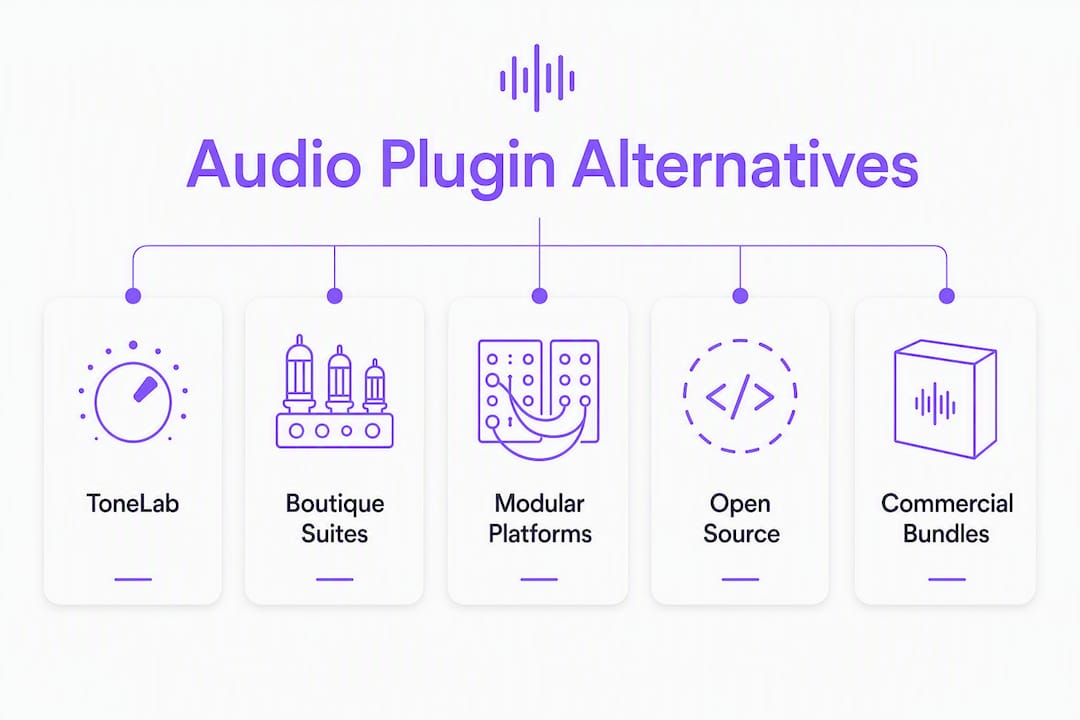
- ToneLab (Vector-dsp) — Recommended. Pro-grade plugin with multi-lane parallel processing, per-lane EQ, VST3/AU/AAX, Win/macOS. Free demo available.
- Commercial mixing/mastering bundles — Broad coverage for mixing chains, metering, and mastering; best for producers who want everything in one purchase.
- Boutique creative effect suites — Unique algorithms and deep modulation; best for sound designers chasing textures that standard tools cannot produce.
- Modular/platform-style plugin suites — Flexible routing and meta-plugin architecture; best for advanced signal chain experiments.
- Open-source programmable environments (e.g., Overtone) — Maximum flexibility via live coding; steep learning curve, strong community, cross-platform.
Table of Contents
- How do these alternatives compare at a glance?
- What does each alternative actually offer in practice?
- How do you pick the right alternative for your setup?
- How we selected and evaluated these alternatives
- Key Takeaways
- The case for precision over breadth
- ToneLab by Vector-dsp: the pro-grade pick worth trying first
- Useful sources to check next
How do these alternatives compare at a glance?
| Option | Best for | Formats | OS | Price model | Trial/demo | Standout strength |
|---|---|---|---|---|---|---|
| ToneLab (Vector-dsp) | Mixing, sound design | VST3, AU, AAX | Win/macOS | One-time license | Free demo | Multi-lane parallel DSP, per-lane EQ, low latency |
| Commercial bundle | Mixing, mastering | VST3, AU, AAX (varies) | Win/macOS | Bundle one-time or subscription | Usually yes | Breadth; metering, dynamics, EQ in one purchase |
| Boutique creative suite | Sound design, creative FX | VST3, AU (AAX limited) | Win/macOS | One-time or subscription | Often yes | Unique algorithms, deep modulation |
| Modular platform suite | Advanced routing, experimental | VST3, AU, AAX | Win/macOS | One-time or subscription | Often yes | Meta-plugin routing, parallel chain flexibility |
| Open-source environment (Overtone) | Programmable synthesis, live coding | Native/standalone | Win/macOS/Linux | Free | N/A (open source) | Full programmability, SuperCollider engine |
A few compatibility notes worth flagging: AAX support (required for Pro Tools) is standard on ToneLab and most major commercial bundles, but boutique suites sometimes ship VST3/AU only, so confirm before buying if Pro Tools is your primary DAW. Open-source environments like Overtone run as standalone or integrated via SuperCollider, not as traditional DAW plugins, so they sit outside the VST3/AU/AAX ecosystem entirely. CPU load varies widely across commercial bundles depending on how many instances you run simultaneously; check vendor system requirements against your session complexity.
What does each alternative actually offer in practice?
ToneLab (Vector-dsp)
ToneLab is built around a multi-lane parallel effects architecture where each lane carries its own EQ targeting. That design lets you process different frequency bands or signal paths independently within a single plugin instance, which cuts down on the plugin-chain juggling that clutters most mixing sessions. It supports VST3, AU, and AAX natively, runs on Windows and macOS, and a free demo is available directly from the ToneLab product page.
Strengths:
- Multi-lane parallel processing with per-lane EQ targeting
- Full VST3/AU/AAX support, including Pro Tools compatibility
- Real-time low-latency DSP suited for tracking and mixing
- One-time license with demo available before purchase
Weaknesses:
- Narrower breadth than a large commercial bundle (focused tool, not a suite)
- Newer product; smaller user community than legacy bundle vendors
Best for: Mixing engineers and sound designers who want precise, low-latency parallel processing without managing multiple plugin instances.
Pro Tip: Before buying any plugin, load the demo in your actual session template. ToneLab's parallel architecture behaves differently from a standard serial chain, so test it on a real mix bus or sound design project, not just a blank session.
Commercial mixing/mastering bundles
Large commercial bundles typically package EQ, compression, limiting, metering, saturation, and sometimes reverb into a single discounted purchase. The value proposition is breadth: you get a full signal chain without hunting for individual plugins. Pricing usually follows a bundle discount model, and most major vendors run frequent sales that can drop costs significantly.
Strengths:
- Broad coverage across mixing and mastering stages
- VST3/AU/AAX support is standard on established vendors
- Frequent discounts and upgrade paths
Weaknesses:
- Plugin overlap within the bundle (multiple compressors with similar character)
- Higher CPU load when running many instances across a large session
- Subscription tiers can add long-term cost
Best for: Producers and engineers who want a complete toolkit from one vendor and prefer not to assemble a plugin collection piece by piece.
Boutique creative effect suites
Boutique suites compete on algorithm originality rather than breadth. You typically get a smaller set of effects, but each one does something that standard tools do not: unusual modulation sources, physically modeled textures, or spectral processing with a distinct character. The trade-off is a smaller ecosystem and, often, limited AAX support.
Strengths:
- Distinctive sonic character not replicated by generic tools
- Deep modulation and creative routing within each plugin
- Strong developer identity and focused update cadence
Weaknesses:
- Smaller plugin count per suite
- AAX availability varies; confirm before purchasing for Pro Tools workflows
- Smaller user communities mean fewer community presets and workarounds
Best for: Sound designers and producers who already have a solid mixing toolkit and want to add textures and effects that stand out in a mix.
Pro Tip: Boutique suites often have the most interesting demos. Download them before any purchase decision. A plugin that sounds extraordinary in isolation can behave unexpectedly on a dense mix bus.
Modular/platform-style plugin suites
Modular platforms let you build custom signal chains inside a single plugin host, routing audio between modules, running parallel paths, and applying meta-processing that would otherwise require complex DAW routing. The flexibility is real, but so is the learning curve. Understanding DSP algorithm design helps you get the most out of these environments, because the routing decisions you make directly affect latency and CPU behavior.
Strengths:
- Highly flexible routing and parallel chain architecture
- Meta-plugin capability consolidates complex chains into one instance
- Useful for experimental processing and custom effect designs
Weaknesses:
- Steeper learning curve than standard insert plugins
- Can introduce additional latency depending on routing depth
- Requires more upfront setup time per session
Best for: Advanced engineers and producers who run complex parallel chains and want to consolidate routing inside a single plugin rather than across multiple DAW tracks.
Open-source programmable environments (Overtone)
Overtone is an open-source toolkit for programmable synthesis and live coding, built on a Clojure API over the SuperCollider engine. It supports MIDI I/O, OSC, and a growing library of musical functions. It is not a DAW plugin in the VST3/AU/AAX sense; it runs as a standalone environment or integrates via SuperCollider. That distinction matters if your workflow centers on a traditional DAW.
Strengths:
- Full programmability; build any synthesis or processing structure you can code
- Free and open source, cross-platform (Windows, macOS, Linux)
- Active community and extensive documentation
Weaknesses:
- No VST3/AU/AAX integration; does not drop into a standard DAW session
- Requires Clojure/programming knowledge to use effectively
- Not suited for real-time mixing or mastering in a conventional session
Best for: Composers, researchers, and sound designers comfortable with live coding who want maximum flexibility outside a traditional DAW environment.
How do you pick the right alternative for your setup?
Start with your DAW and format requirements, because everything else is secondary if the plugin does not load.
Must-verify compatibility checklist:
- Plugin format: Does your DAW require VST3, AU, or AAX? Pro Tools demands AAX. Logic Pro uses AU. Most others support VST3.
- OS version: Confirm the plugin supports your current Windows or macOS version, not just the latest release.
- Sample rate support: Verify the plugin handles your session's sample rate (44.1 kHz, 48 kHz, 88.2 kHz, 96 kHz).
- CPU load: Check vendor system requirements against your CPU and typical session track count.
- Plugin window sizing: HiDPI/Retina scaling support matters on modern displays; blurry UIs slow down workflow.
- Offline vs. real-time processing: Some mastering tools process offline only; confirm this fits your workflow.
Questions worth asking before you commit:
- Do I need low-latency performance for live tracking or monitoring? If yes, ToneLab and established commercial bundles are safer bets than modular platforms with deep routing chains.
- Is AAX required? If you work in Pro Tools, filter out any option that does not explicitly list AAX support.
- Do I prefer a one-time license or a subscription? One-time licensing is more predictable for long-term cost, especially for tools you use on every session.
- How important is a stable update cadence? A developer who ships regular updates and communicates changelogs is a lower-risk purchase than one with a sparse public history.
Red flags to watch for: no demo or trial available, licensing terms that are unclear about machine limits or transfer rights, sparse developer communication (no public changelog, no support channel), and no user community or documented workarounds for known issues.
Quick decision flow: Choose ToneLab when you need pro-grade DSP with low-latency parallel processing and full format support. Choose a commercial bundle when breadth and convenience matter more than architectural precision. Consider a modular platform when your routing needs exceed what standard insert chains can handle. Use an open-source environment like Overtone when programmability and cost are the priorities and DAW integration is not required.
Pro Tip: Crowdsourced directories are useful for discovery but often rank by popularity rather than suitability. Always cross-check with the vendor's own demo and system requirements page before making a decision.
How we selected and evaluated these alternatives
Selection for this shortlist followed a consistent set of criteria applied across every option:
- Format compatibility: VST3, AU, and AAX support verified against vendor documentation
- DSP architecture: Parallel processing capability, latency characteristics, and algorithm design quality
- Feature fit: Relevance to mixing, mastering, and sound design workflows
- Demo availability: Whether a free trial or demo exists before purchase
- Update cadence and developer reputation: Public changelog history and responsiveness to user issues
- Community and support: Active forums, documentation quality, and known workarounds for common issues
This evaluation draws on vendor documentation, hands-on testing in standard DAWs, and Vector-dsp's ongoing editorial work covering DSP algorithm design and plugin comparisons. Name collision research confirmed that searches for "overtonesoftware.com alternatives" frequently surface non-audio results: the Overton policy index and OverNite Software's LMS platform both appear in related queries despite having no connection to audio DSP.
Key Takeaways
ToneLab (Vector-dsp) is the strongest direct alternative for audio professionals who need multi-lane parallel DSP, full VST3/AU/AAX support, and low-latency real-time performance in a single plugin.
| Point | Details |
|---|---|
| Verify format first | Confirm VST3, AU, or AAX support before evaluating any other feature. |
| Try ToneLab's demo | Download the free demo and test it in your actual session template before purchasing. |
| Watch for name collisions | Searches for overtonesoftware.com alternatives often return Overton (policy index) or OverNite (LMS), neither of which is an audio product. |
| One-time licensing saves money | For tools used on every session, a one-time license is more cost-predictable than a recurring subscription. |
| ToneLab (Vector-dsp) | Multi-lane parallel architecture, per-lane EQ, VST3/AU/AAX, and a free demo make it the recommended pro-grade pick. |
The case for precision over breadth
The audio plugin market rewards breadth in marketing and precision in practice. Large bundles look impressive on a feature list, but most engineers settle into a small set of tools they trust for every session. The plugins that earn that trust tend to share one quality: they do exactly what they claim, under load, without surprises.
That is the argument for ToneLab's architecture. Multi-lane parallel processing with per-lane EQ targeting is not a feature you will find in most commercial bundles, because bundles are built for coverage, not for a specific signal-processing philosophy. Whether that specificity matters to you depends on your workflow. If you are assembling a general toolkit, a commercial bundle makes sense. If you are building around a particular approach to parallel processing, a focused tool built on that architecture will outperform a generic one every time.
Boutique suites and modular platforms each have their place, and open-source environments like Overtone serve a real need for programmable synthesis. The honest answer is that no single option fits every workflow. The shortlist here covers the main categories; the decision comes down to your DAW, your format requirements, and how you actually work.
ToneLab by Vector-dsp: the pro-grade pick worth trying first
If you need a direct alternative to overtonesoftware.com for professional mixing and sound design, ToneLab delivers where it counts. The multi-lane parallel effects architecture lets you run independent processing paths with per-lane EQ targeting inside a single plugin instance, which keeps your session routing clean and your CPU load predictable. It supports VST3, AU, and AAX natively, runs on Windows and macOS, and carries a one-time license with no subscription required.
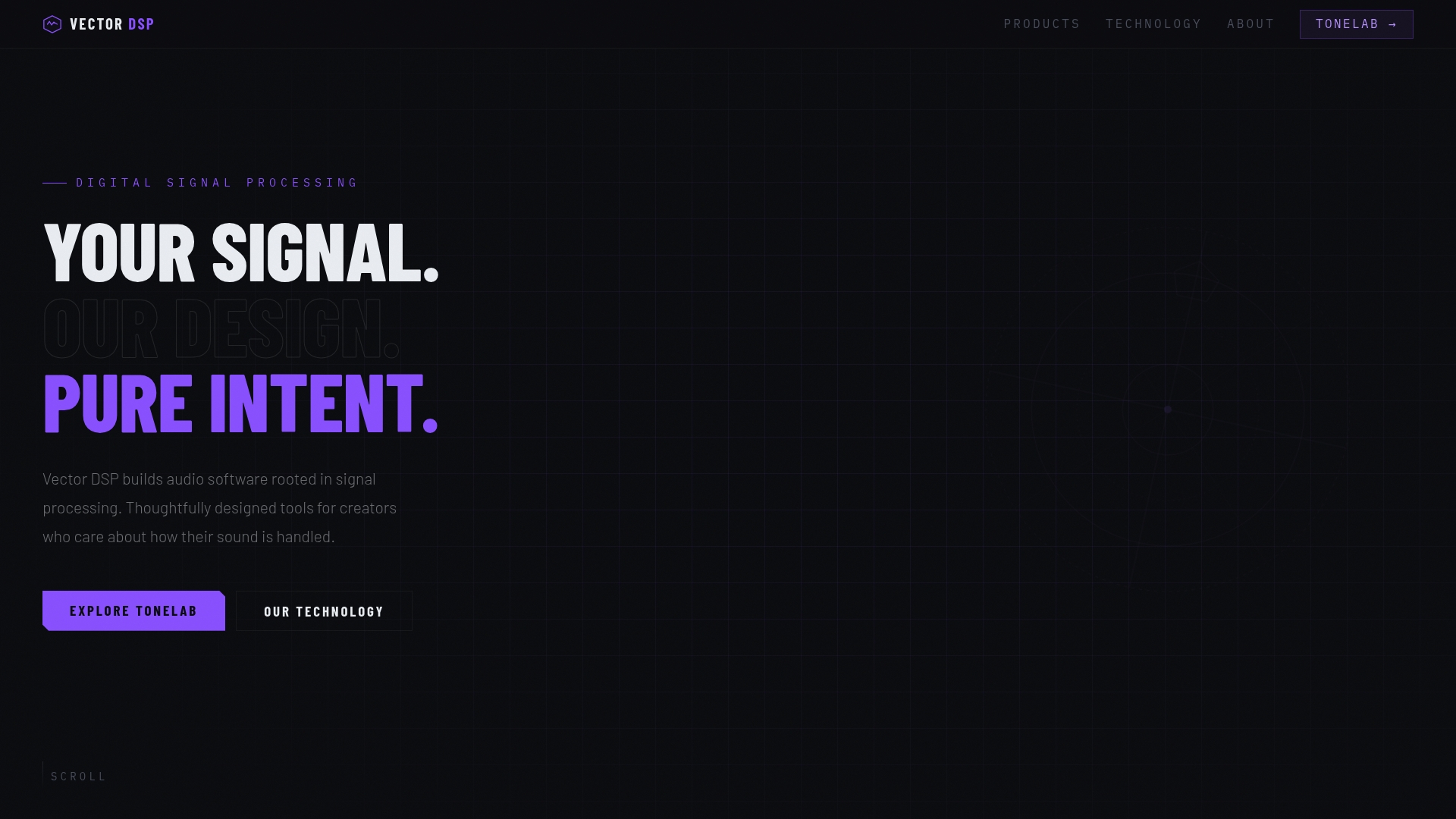
A free demo is available on the ToneLab product page. When you test it, load it into your actual session template rather than a blank project. Check CPU behavior at your working sample rate, confirm AAX loads correctly if you are on Pro Tools, and run a few preset recalls to see how the parallel lanes behave on your material. That test takes ten minutes and tells you more than any feature comparison.
Useful sources to check next
- ToneLab product page (Vector-dsp) — Demo download, feature list, supported formats (VST3/AU/AAX), OS requirements, and licensing details. Start here.
- DSP Algorithm Design for Audio Professionals (Vector-dsp blog) — Technical background on algorithm types and performance considerations; useful when evaluating plugin architectures.
- Top 5 WavDSP.com Alternatives (Vector-dsp blog) — Related shortlist comparing DSP plugin vendors; good for a second opinion on the category.
- Overton policy index — Included only for name-collision awareness. This is a policy-document database, not an audio product. If your search results led you here, you are in the wrong place for audio DSP.
On each vendor page, check for:
A note on name collisions: searches for "overtonesoftware.com alternatives" and similar software to overtonesoftware regularly surface the Overton policy index, OverNite Software (an LMS vendor), and the Overtone open-source live-coding project alongside audio plugin results. Before downloading anything, confirm you are on an audio plugin vendor's page: look for VST3/AU/AAX format references, DAW compatibility notes, and a product page that describes audio processing. If none of those appear, you are on the wrong site.