VST3, AU, and AAX Format Differences Explained
VST3, AU, and AAX Format Differences Explained

If you've ever downloaded a plugin bundle and wondered which format to install, you're not alone. The vst3 au aax format differences trip up producers, engineers, and developers at every level. Each format, properly called an audio plugin format standard, exists within its own ecosystem of DAW compatibility requirements, OS constraints, and technical capabilities. Pick the wrong one for your workflow and you're either locked out of features or stuck running compatibility wrappers that introduce latency and headaches. This article cuts through the confusion and gives you the framework to make the right call every time.
Table of Contents
- Key Takeaways
- 1. How to evaluate audio plugin format differences
- 2. VST3: features, compatibility, and workflow advantages
- 3. AU: Mac-exclusive integration and unique capabilities
- 4. AAX: Pro Tools' proprietary plugin solution
- 5. Side-by-side format comparison
- 6. Choosing the right format for your workflow
- 7. My honest take on the format debate in 2026
- Vector-dsp plugins built for every format
- FAQ
Key Takeaways
| Point | Details |
|---|---|
| DAW determines format | Logic Pro requires AU; Pro Tools requires AAX. VST3 works broadly everywhere else. |
| VST3 is the most portable | VST3 runs on Windows and macOS across most modern DAWs with no workarounds needed. |
| AU is macOS only | AU format advantages apply exclusively to Apple users in Logic Pro and GarageBand. |
| AAX requires certification | AAX plugin benefits come with Avid's strict validation process, adding developer overhead. |
| Install all formats when possible | Most developers bundle multiple formats. Installing all of them maximizes flexibility across sessions. |
1. How to evaluate audio plugin format differences
Before comparing specific formats, you need a clear set of criteria. Otherwise you're making format decisions based on whatever a forum post said.
Here are the five factors that actually matter when evaluating any plugin format:
- OS and DAW compatibility. Does the format work on your operating system and inside your specific DAW? This is non-negotiable.
- CPU efficiency and performance. How well does the format manage processing resources, especially inside large sessions?
- Automation and routing features. Does the format support sample-accurate automation, MIDI routing, and dynamic I/O?
- Installation and plugin management. Where does the format install on your system? How easy is it to scan, validate, and organize?
- Developer support and longevity. Is the format still actively maintained and adopted by developers building new tools?
Run any format through this checklist and the decision becomes far less abstract.
Pro Tip: If you're a developer building tools across platforms, build VST3 first. Then add AU for macOS users and AAX last due to Avid's certification requirements.
2. VST3: features, compatibility, and workflow advantages
VST3 is Steinberg's third-generation plugin format and the closest thing the industry has to a universal standard in 2026. Understanding the VST3 installation guide process alone reveals how much cleaner this format is compared to its predecessors.
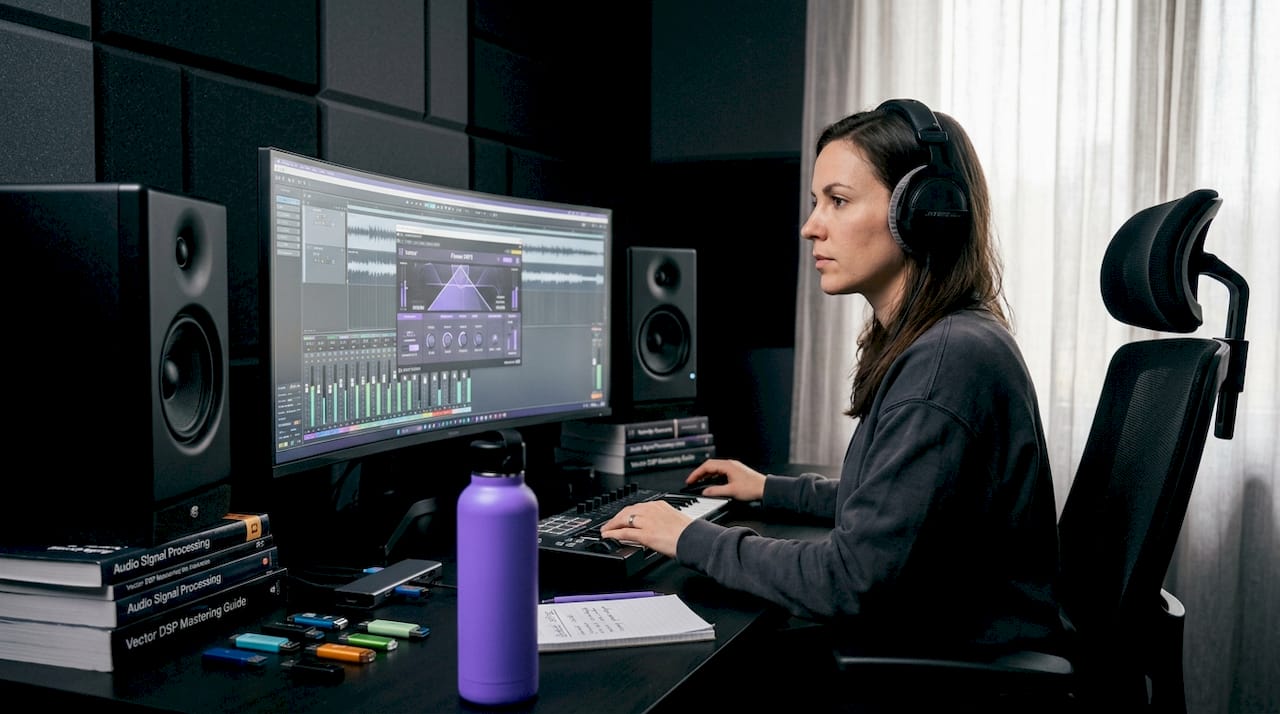
VST3 is the most widely supported cross-platform plugin format, running on both Windows and macOS with native support across Ableton Live, Cubase, Reaper, Studio One, and most modern DAWs. That breadth makes it the default recommendation for any producer who switches between platforms or collaborates across different studio setups.
The technical improvements over older formats are substantial:
- Sample-accurate automation. VST3 supports sample-accurate automation and dynamic parameter changes without the stepped, imprecise behavior seen in VST2.
- Dynamic I/O activation. Unused audio and MIDI streams are deactivated automatically, reducing CPU load in complex sessions without any manual input.
- Improved plugin management. Presets, factory content, and plugin state data are stored in standardized locations, making backups and transfers much cleaner.
- Enhanced MIDI routing. VST3 supports multiple MIDI inputs and outputs per plugin, which is a significant upgrade for instrument developers building complex virtual instruments.
Pro Tip: When running VST3 on macOS alongside AU versions of the same plugin, test both in your DAW. Some developers optimize their AU builds more heavily for Logic Pro, which can affect real-world performance.
3. AU: Mac-exclusive integration and unique capabilities
AU, short for Audio Units, is Apple's proprietary plugin format. It ships with macOS and forms the backbone of both Logic Pro and GarageBand's plugin ecosystems. If you work primarily inside Logic Pro, AU isn't just an option. It's the only native choice. Logic Pro does not natively support VST or AAX formats without third-party workarounds.
The AU format advantages that set it apart from other formats include:
- Deep Logic Pro integration. AU plugins interact directly with Logic's mixer, automation lanes, and Smart Controls in ways VST3 cannot replicate inside that host.
- OS-level sandboxing. Apple enforces security validation at the system level, which helps protect session stability. A misbehaving AU plugin is far less likely to crash your entire DAW.
- Standalone AU hosting. AU supports standalone hosts on macOS, which means sound designers and live performers can run instruments and effects without opening a DAW at all.
- GarageBand compatibility. For educators and beginners on Apple hardware, AU is the only format that integrates natively with GarageBand.
The hard limit of AU is equally clear: it only runs on macOS. If you collaborate with Windows-based engineers or ever plan to switch DAWs off Apple's ecosystem, AU plugins will not transfer.
4. AAX: Pro Tools' proprietary plugin solution
AAX, which stands for Avid Audio eXtension, is the plugin format built specifically for Pro Tools. It replaced the older RTAS and TDM formats and comes in two variants that are worth knowing: AAX Native and AAX DSP.
The AAX plugin benefits within a Pro Tools session are real and significant. AAX DSP offloads processing to Avid's HDX hardware, which means you can run large numbers of processing-intensive plugins without taxing your CPU. For large commercial studios running complex mix sessions, this hardware acceleration is a genuine operational advantage.
Key AAX characteristics:
- Pro Tools only. AAX works exclusively inside Avid Pro Tools on both Windows and macOS. No other major DAW supports it natively.
- Strict developer certification. Every AAX plugin must pass Avid's formal validation process before release. This reduces compatibility bugs but adds significant time and cost for smaller developers.
- Larger install sizes. AAX packages typically carry more overhead than VST3 or AU equivalents due to the certification metadata and DSP-ready architecture.
- Wrapper dependency for non-AAX formats. If you want to run a VST3 or AU plugin inside Pro Tools, you need a third-party wrapper. Wrappers can introduce latency and GUI quirks, so native AAX support is always the preferred path for professional sessions.
5. Side-by-side format comparison
Here's the practical comparison that makes the VST3 vs AAX comparison and AU differences concrete at a glance:
| Feature | VST3 | AU | AAX |
|---|---|---|---|
| OS support | Windows and macOS | macOS only | Windows and macOS |
| DAW compatibility | Most modern DAWs | Logic Pro, GarageBand | Pro Tools only |
| CPU optimization | Dynamic I/O activation | Standard per-plugin | DSP offload via HDX hardware |
| Sample-accurate automation | Yes | Yes | Yes |
| Developer certification required | No | Apple notarization | Avid validation required |
| Standalone hosting | Limited | Yes (AU hosts on macOS) | No |
| Cross-platform portability | High | None | None |
The table tells the story clearly. VST3 wins on portability and technical features. AU wins on macOS depth and security. AAX wins inside Pro Tools studios running Avid hardware, where DSP offloading justifies the constraints.
6. Choosing the right format for your workflow
Format choice is not philosophical. It's determined by your DAW, your operating system, and your collaboration requirements. Here's how to decide:
- Logic Pro or GarageBand users. Install AU. These DAWs do not support other formats natively, so AU is your starting point. Check that your plugins are Apple-notarized for compatibility with recent macOS security requirements.
- Pro Tools users. Install AAX. Full stop. If a plugin you need doesn't ship in AAX, evaluate whether a wrapper solution is stable enough for that specific session context before relying on it.
- Windows-based producers on Ableton, Reaper, or FL Studio. VST3 is your primary format. There's no functional reason to use VST2 for new plugins when VST3 support is nearly universal across Windows DAWs.
- macOS producers outside Logic. You have a genuine choice between VST3 and AU. Many developers optimize their AU builds specifically for Logic Pro workflows, which can mean slightly tighter performance inside other hosts varies. Testing both in your specific host is the smartest move.
- Multi-DAW producers and developers. Install all available formats when a developer bundles them. The disk space cost is minimal compared to the flexibility you gain when switching contexts between sessions. Most plugin developers provide AU, VST3, and AAX in a single installer specifically because this multi-format approach is standard practice.
Pro Tip: Organize your plugin library by format inside your DAW's plugin manager. Tagging which instruments and effects are available in multiple formats saves real time when you open a session in an unfamiliar environment.
7. My honest take on the format debate in 2026
I've spent years watching this discussion pull producers into unnecessary arguments. Here's what I've actually found after working across DAWs and helping developers build for multiple formats.
The format itself rarely determines whether a plugin performs well in your session. Real-world performance is dictated far more by how carefully the developer coded the plugin for a specific DAW than by whether it's VST3, AU, or AAX. I've run AU plugins that crush CPU on a fast Mac, and VST3 instruments that run silently efficient in sessions with 80 tracks. Format architecture sets the ceiling. Developer implementation determines what you actually hit.
What I've learned to prioritize is format coverage over format preference. When I set up a new machine or evaluate a new plugin, the first question I ask is whether it ships in all three formats. If it does, I install all of them. The few megabytes of additional disk usage is meaningless against the operational cost of discovering a format mismatch mid-session.
VST3's dynamic I/O and sample-accurate automation make it the most technically forward format for modern production. But that doesn't mean AU is behind. In Logic Pro specifically, AU integration runs at a depth that VST3 cannot currently replicate inside that host. The right question isn't which format is best. It's which format fits your actual environment.
The wrapper conversation deserves honesty too. Third-party wrappers work. I've used them. But if you're running a critical mix session in Pro Tools and relying on a wrapped VST3, you're carrying risk you don't need to carry. Invest in AAX-native plugins for Pro Tools sessions where stability matters.
— Kai
Vector-dsp plugins built for every format
Understanding format differences is one thing. Having tools that actually support all three formats without compromise is another.
Vector-dsp builds professional audio plugins from the ground up with VST3, AU, and AAX support across all major platforms. The engineering team at Vector-dsp designs each plugin to perform natively in its target format rather than simply wrapping a single codebase, which means the AU build performs in Logic Pro exactly as intended, the AAX build passes Avid's standards, and the VST3 build takes full advantage of dynamic I/O and advanced routing. If you're building or sourcing plugins that need to hold up across professional studio environments, Vector-dsp is worth your time. You can also explore plugin development resources covering format-specific best practices for producers and developers alike.
FAQ
What is the main difference between VST3, AU, and AAX?
VST3 is a cross-platform format supported by most modern DAWs on Windows and macOS. AU is macOS-only and native to Logic Pro and GarageBand. AAX is exclusive to Pro Tools on both Windows and macOS.
Can you use VST3 plugins in Pro Tools?
Not natively. Pro Tools only supports AAX format. You can use third-party wrappers to run VST3 inside Pro Tools, but wrappers can introduce latency and stability issues that make native AAX the stronger option for professional sessions.
Does AU format work on Windows?
No. AU is exclusively a macOS format. Windows producers should use VST3 as their primary plugin format across Ableton Live, Reaper, FL Studio, and other Windows-compatible DAWs.
Should I install VST3 or AU on a Mac?
If you use Logic Pro, install AU first. For other DAWs on macOS such as Ableton or Studio One, VST3 is fully supported. When a developer bundles both formats, installing all available formats is the safest approach for long-term flexibility.
Why does AAX require Avid certification?
Avid requires all AAX plugins to pass a formal validation process to protect session stability in Pro Tools. This certification adds development time and cost but reduces compatibility bugs in professional studio environments where session reliability is non-negotiable.